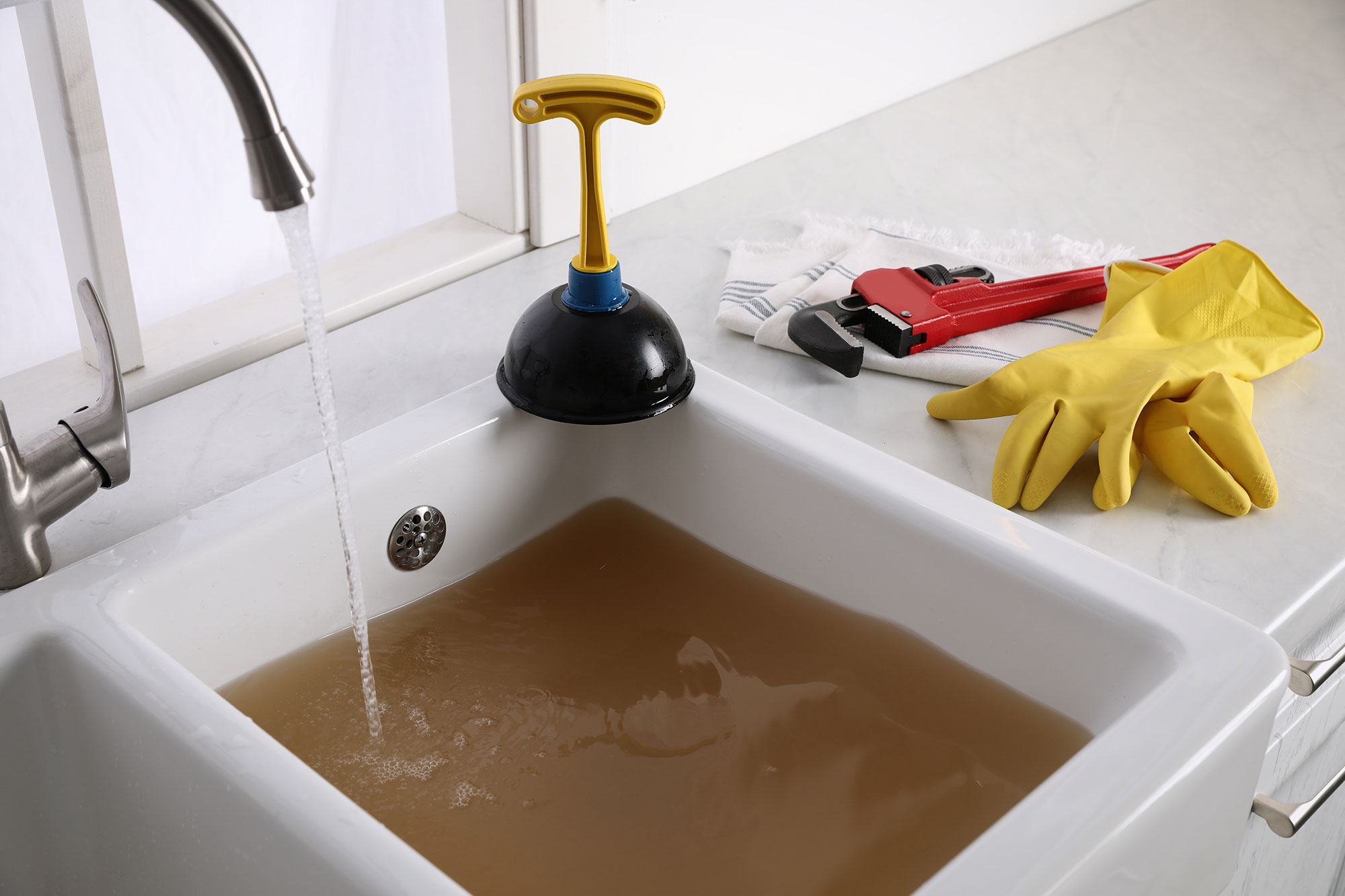
You’ve been careful. You use a drain strainer in the shower. You scrape your plates before washing them. You’ve sworn off pouring grease down the kitchen sink. And yet, every few months, you’re standing in a slowly filling bathtub or waiting for the bathroom sink to drain while you brush your teeth.
If that sounds familiar, you’re not doing anything wrong — or at least, not everything wrong. The truth is that repeat drain clogs are rarely just a lifestyle problem. In many cases, something is happening inside your pipes that no amount of careful habits will fix on its own. And in the Houston Bay Area, a handful of specific factors make homeowners here especially prone to stubborn, recurring drain issues.
Here’s what’s really going on.
First, Let's Talk About What Everyone Thinks Is the Problem
Most homeowners assume clogs come from one of three things: hair, grease, or “stuff that shouldn’t go down there.” And yes, those are real contributors. Hair wraps itself around drain stoppers and collects soap scum until the whole thing becomes a solid plug. Grease solidifies inside pipes as it cools. Wipes, cotton balls, and other non-flushables cause all kinds of problems in sewer lines.
But here’s the thing — if those were the only causes, a good snaking or a bottle of drain cleaner would solve the problem permanently. For a lot of homeowners, it doesn’t. The clog comes back in the same drain, or clogs start appearing in multiple drains at once, or the problem gets progressively worse no matter what you do.
That’s when something structural is usually at play.
The Deeper Causes Nobody Talks About
Pipe Buildup That Goes Way Beyond a Single Clog
Inside every drain pipe, there’s a slow accumulation happening that most homeowners never see. Soap scum, minerals from hard water, grease residue, and organic matter gradually coat the interior walls of the pipe. This buildup — called scale or biofilm — narrows the pipe’s diameter a little more every year.
A brand-new four-inch drain pipe flows very differently than one that’s been accumulating a quarter inch of buildup on all sides for fifteen years. The reduced diameter means slower drainage, which means debris takes longer to flush through, which means more of it sticks. It becomes a self-reinforcing cycle.
This is especially relevant in the Houston area because our water is notoriously hard. Hard water is high in calcium and magnesium minerals, and those minerals leave deposits on everything they touch — your showerhead, your coffee maker, and yes, the inside of your pipes. Over time, mineral scale can build up significantly in both supply and drain lines, and no amount of drain cleaner addresses it.
If your home is more than ten or fifteen years old and you’ve never had your drain lines professionally cleaned — not just cleared, but cleaned — buildup is almost certainly a factor in your recurring clogs.
Pipe Belly: When Your Pipes Sag Underground
This one surprises a lot of homeowners. Drain pipes are installed with a slight downward slope so that gravity moves wastewater toward the sewer. When that slope is disrupted — when a section of pipe sags or shifts downward — you get what plumbers call a belly.
In a pipe belly, wastewater still moves forward, but it slows down in the low spot. Solid waste and debris settle there instead of flowing through. Over time, that low spot becomes a collection point for everything going down your drain, and no amount of snaking will permanently solve it because the physical cause is still there. Clear it today, and it fills back up in a few weeks or months.
What causes pipe bellies? In the Houston area, the answer is almost always soil movement. Our clay-heavy soil expands when wet and contracts when dry, and it does this repeatedly throughout the year. That constant movement shifts the ground beneath your pipes. Older homes, homes that have experienced significant rainfall or flooding, and homes built on certain soil types in our area are particularly vulnerable.
A pipe belly can only be confirmed with a camera inspection and fixed by excavating and re-laying the affected section of pipe. It’s not a glamorous fix, but it’s the only one that actually works.
Tree Root Intrusion
This is one of the most common causes of serious, recurring drain problems that homeowners have never considered — and in League City, Clear Lake, Friendswood, and the surrounding suburbs, it’s extremely prevalent.
Tree roots are opportunistic. They grow toward moisture, and a sewer line carrying warm, nutrient-rich water is essentially a beacon. Roots find their way in through the smallest imperfections: a hairline crack, a slightly loose joint connection, or a tiny gap where two pipe sections meet. Once inside, they don’t stay small. They expand, branch out, and eventually create a dense mass that catches everything flowing through.
The first sign is often slow drains throughout the house, not just one. Gurgling sounds from your toilets or drains are another tell. Sewage odors in the yard or persistent wet spots in the lawn can indicate a root intrusion that has progressed far enough to crack or partially collapse the line.
You don’t need a massive oak tree overhead for this to happen. Aggressive-rooted trees and shrubs — including many common landscaping plants used in this area — can send roots remarkably far in search of water. And you don’t need to be in an older neighborhood. New construction homes can develop root intrusion within just a few years if trees are planted anywhere near the sewer line.
Old or Deteriorating Pipes
If your home was built before the mid-1980s, there’s a reasonable chance your drain lines are made of materials that have simply aged past their useful life. Cast iron pipes, while durable, eventually rust and corrode from the inside out. The rough, corroded interior surface catches debris that would slide right through a smooth pipe. In some cases, the pipe walls have deteriorated to the point where sections are partially collapsed.
Older galvanized steel pipes have similar issues — they corrode, they scale up, and the interior surface degrades significantly over decades of use.
Even if your home is newer, ABS or PVC plastic drain lines can crack, separate at the joints, or develop offsets over time, particularly if the home has shifted on its foundation. A separated joint underground doesn’t just cause clogs — it allows wastewater to escape into the surrounding soil, which creates a completely different set of problems.
The only way to know for certain what condition your pipes are in is a camera inspection. There’s no guesswork involved — a licensed plumber runs a camera through the line and you can see exactly what’s happening in real time.
Venting Problems
Every drain in your home is connected to a vent system — a network of pipes that runs up through your walls and exits through the roof. These vents do something critical: they allow air into the drain system so that water can flow freely. Without proper venting, you get a vacuum effect that slows drainage and causes the gurgling sounds many homeowners notice.
Vent pipes can become blocked by bird nests, debris, leaves, or even dead animals. When that happens, multiple drains in the house slow down simultaneously — often leading homeowners to think they have several separate clogs when the real problem is one blocked vent stack.
Venting issues are frequently misdiagnosed as drain clogs. If you’ve had multiple drains cleared and the problem keeps returning, or if you notice gurgling in one drain when you use another fixture, it’s worth having the vent system inspected.
Why Store-Bought Drain Cleaners Make Things Worse
It’s worth addressing this directly: chemical drain cleaners like Drano or Liquid-Plumr don’t fix any of the problems described above, and regular use can actually make your plumbing situation worse over time.
Chemical drain cleaners work by generating heat through a chemical reaction. That heat can soften and warp PVC pipes, and over time, repeated use contributes to joint failure. More importantly, these products only partially dissolve clogs — they eat through enough material to restore some flow, but leave a narrowed passage that clogs again faster than before.
They also don’t touch mineral scale, pipe bellies, root intrusion, or any structural issue. For recurring clogs, they’re a temporary band-aid that masks a problem that will eventually require real attention — usually more extensive attention than if it had been addressed earlier.
What Actually Solves the Problem
If you’re dealing with a clog right now, a professional drain clearing will restore flow. But if the same drain keeps clogging, or multiple drains are slow, or you’ve never had a professional inspection done on your drain system, here’s what actually helps:
Hydro-jetting is the most thorough drain cleaning method available. A high-pressure water jet scours the interior walls of the pipe, removing buildup, grease, soap scum, and mineral scale — not just punching a hole through the clog, but actually cleaning the pipe. For homes with significant buildup or a history of grease problems, hydro-jetting is in a completely different category than snaking.
Camera inspection is the only way to diagnose structural problems like pipe bellies, root intrusion, deteriorating pipe walls, or separated joints. It takes the guesswork out entirely. If you have recurring drain problems, this is the logical first step before spending money on any other treatment.
Root treatment for confirmed root intrusion can include mechanical cutting, hydro-jetting, and in some cases chemical root inhibitors applied to the line to slow regrowth. In more advanced cases, pipe repair or replacement is necessary — but catching it early makes the options significantly less expensive.
Pipe lining, for older homes with deteriorating pipes, can sometimes restore a failed sewer or drain line without full excavation. A flexible liner is inserted and cured in place, creating essentially a new pipe inside the old one.
A Note on Houston-Area Homes Specifically
Everything described in this article applies everywhere, but several of these issues are more common here than in most other parts of the country. Our clay soil shifts constantly, making pipe bellies and joint separation more likely. Our hard water accelerates mineral scale buildup faster than in cities with softer water supplies. The subtropical climate and rainfall patterns create ideal conditions for aggressive root growth year-round. And a large portion of the housing stock in League City, Clear Lake, Webster, Pearland, and the surrounding communities was built in the 1970s through 1990s — old enough for original pipes to be showing their age.
None of this means there’s anything wrong with your home. It just means that drain problems in this area often have a real underlying cause that deserves a real look.
When to Call a Plumber
You should call a professional plumber — not just pour something down the drain and wait — when:
- The same drain clogs repeatedly within a few months of being cleared
- Multiple drains in the house are slow at the same time
- You hear gurgling from toilets or drains when running other fixtures
- You notice sewage odors inside the house or outside near the sewer cleanout
- Your home is more than 15 years old and has never had a professional drain inspection
- Water is backing up into a tub or floor drain when you flush the toilet
That last one, in particular, is a sign of a sewer line issue that needs immediate attention.
Space City Plumbing serves League City, Clear Lake, Webster, and the surrounding communities with 24-hour emergency plumbing service. Our licensed master plumbers offer camera drain inspections, hydro-jetting, root removal, and full sewer line repair and replacement. If your drains keep coming back clogged, we’ll find out why — and actually fix it.